
Search
- Music Sheet Cover, "Arouse Ye, Patriot Whigs!," 1840 -

- 1840
- Collections - Artifact
Music Sheet Cover, "Arouse Ye, Patriot Whigs!," 1840
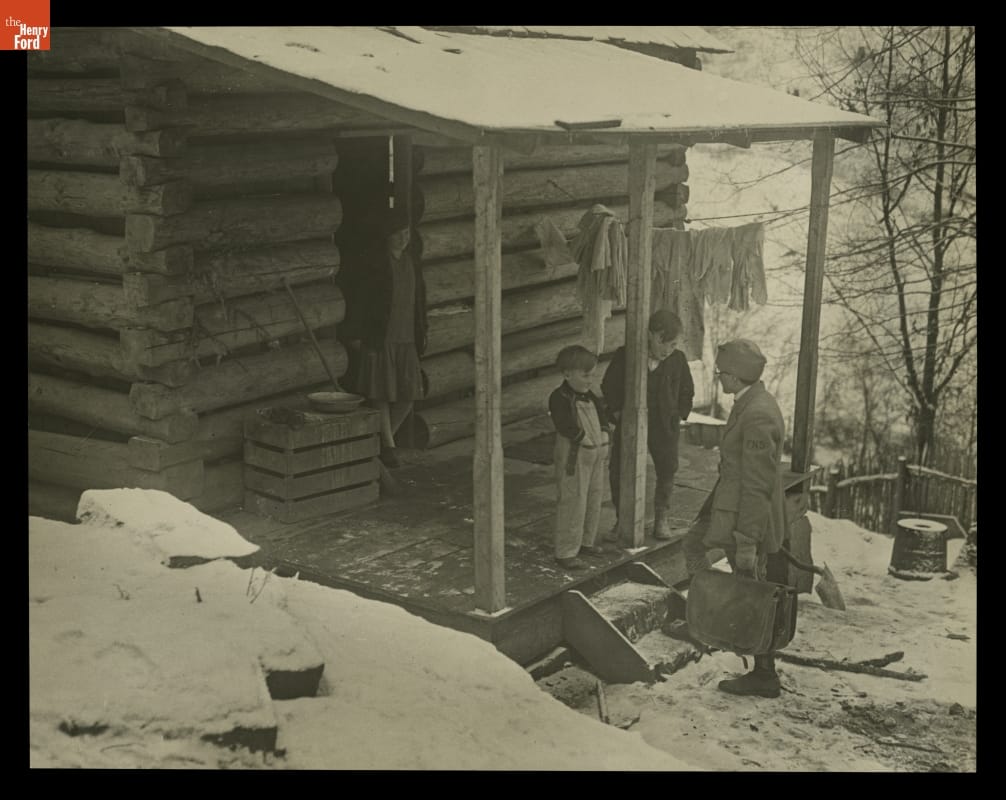
- Frontier Nursing Service, "The Nurse on Her Rounds," 1931 - Mary Breckinridge, the daughter of a prominent Southern family, established the Frontier Nursing Service (FNS) in 1925. Breckinridge initially backed the enterprise with her own money, but soon cultivated wealthy individuals, including Clara Ford and her son Edsel, to help support the FNS. Through her philanthropic efforts, Breckinridge brought qualified nurse-midwives and modern, life-saving healthcare to many inaccessible areas of eastern Kentucky.
- 1931
- Collections - Artifact
Frontier Nursing Service, "The Nurse on Her Rounds," 1931
Mary Breckinridge, the daughter of a prominent Southern family, established the Frontier Nursing Service (FNS) in 1925. Breckinridge initially backed the enterprise with her own money, but soon cultivated wealthy individuals, including Clara Ford and her son Edsel, to help support the FNS. Through her philanthropic efforts, Breckinridge brought qualified nurse-midwives and modern, life-saving healthcare to many inaccessible areas of eastern Kentucky.
- Engraving, Abraham Lincoln Birthplace, 1897 -
- 1897
- Collections - Artifact
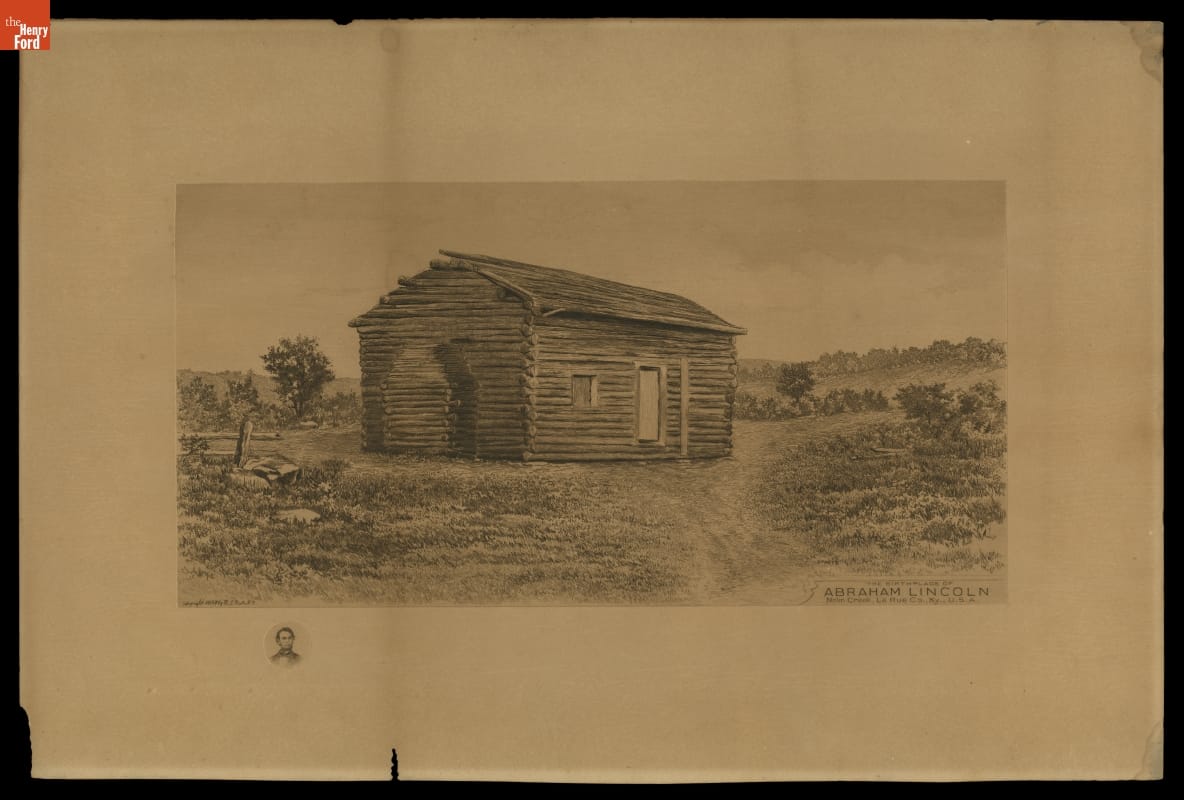
Engraving, Abraham Lincoln Birthplace, 1897
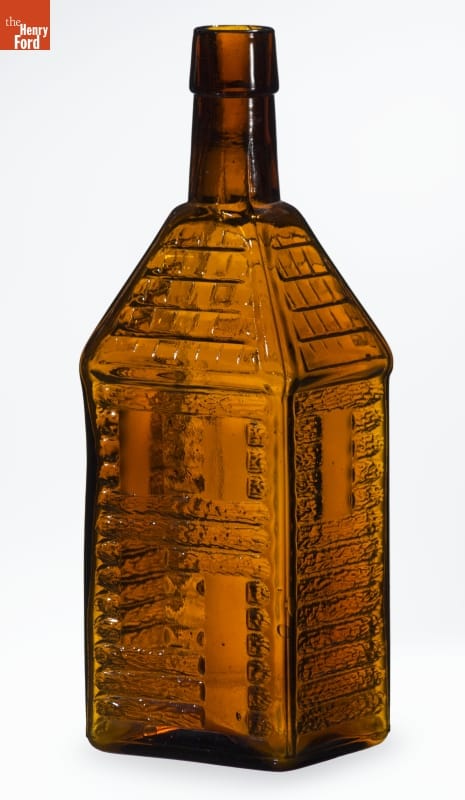
- Holtzerman's Patent Stomach Bitters, 1862-1890 - Bitters is an herb-infused alcoholic mixture. Named for its bitter taste, the liquid was originally developed as a medicinal tonic to help soothe stomach complaints or other digestive disorders. During the late 19th and early 20th centuries, patent-medicine dealers bottled and sold the elixir. Americans purchased bitters in simple mold-blown bottles or ones shaped like drums, barrels, or cabins.
- 1862-1890
- Collections - Artifact
Holtzerman's Patent Stomach Bitters, 1862-1890
Bitters is an herb-infused alcoholic mixture. Named for its bitter taste, the liquid was originally developed as a medicinal tonic to help soothe stomach complaints or other digestive disorders. During the late 19th and early 20th centuries, patent-medicine dealers bottled and sold the elixir. Americans purchased bitters in simple mold-blown bottles or ones shaped like drums, barrels, or cabins.
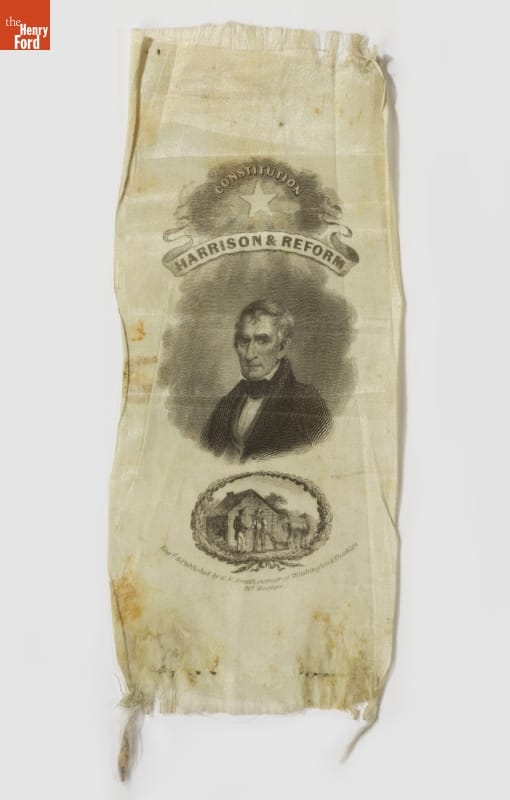
- William Henry Harrison Campaign Ribbon, 1836-1840 - Sixty-seven-year-old retired military general William Henry Harrison took advantage of a wildly popular campaign staged by Whig Party leaders, who capitalized on the false perception that Harrison was a common frontier farmer living in a log cabin. Cheering crowds lined Pennsylvania Avenue for his inauguration on March 4, 1841. He performed nominal duties before falling ill and dying of pneumonia a month into his presidency.
- 1836-1840
- Collections - Artifact
William Henry Harrison Campaign Ribbon, 1836-1840
Sixty-seven-year-old retired military general William Henry Harrison took advantage of a wildly popular campaign staged by Whig Party leaders, who capitalized on the false perception that Harrison was a common frontier farmer living in a log cabin. Cheering crowds lined Pennsylvania Avenue for his inauguration on March 4, 1841. He performed nominal duties before falling ill and dying of pneumonia a month into his presidency.
- Label, "Argonaut Brand Grapes," 1888-1899 -
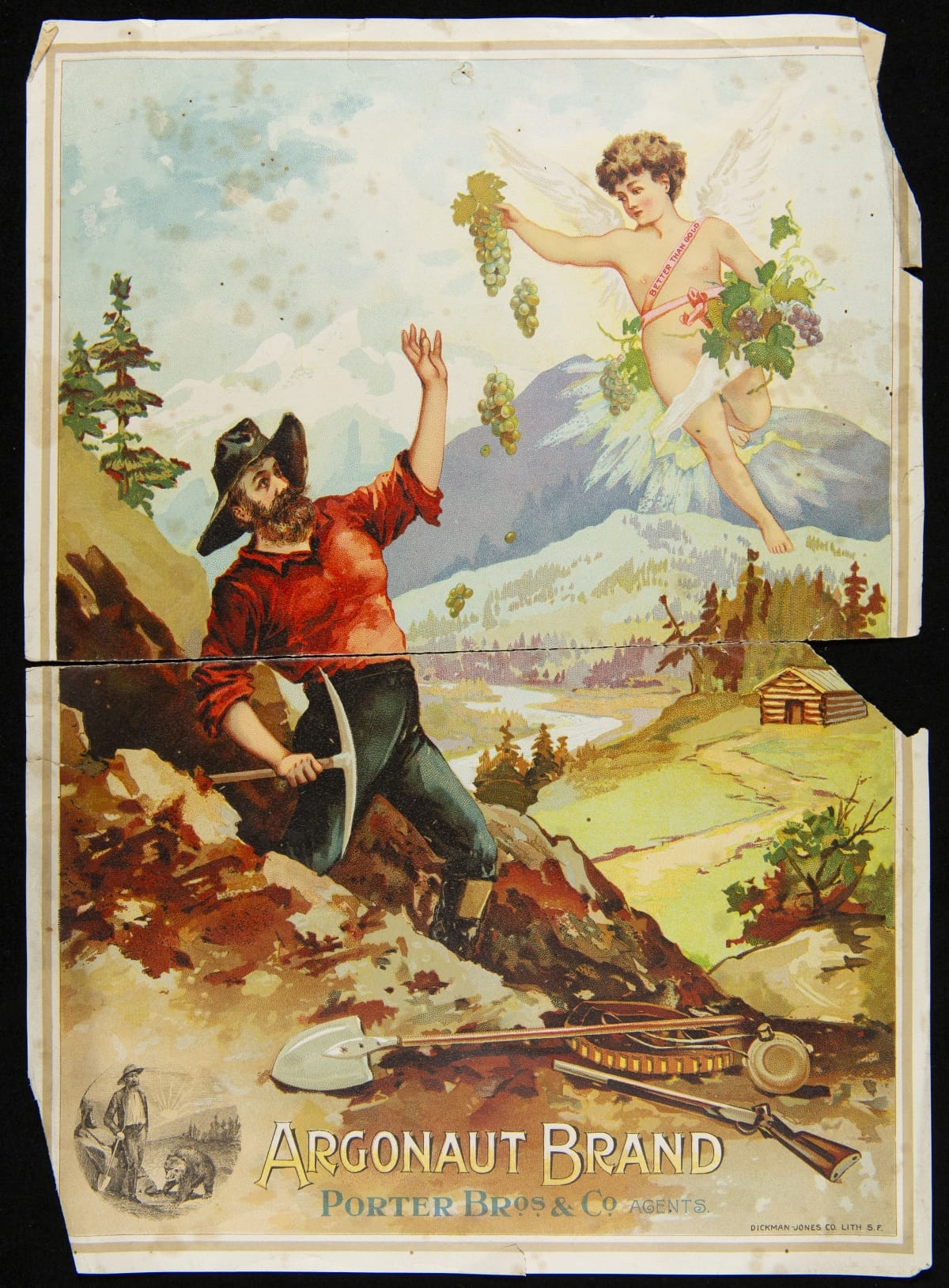
- 1888-1899
- Collections - Artifact
Label, "Argonaut Brand Grapes," 1888-1899
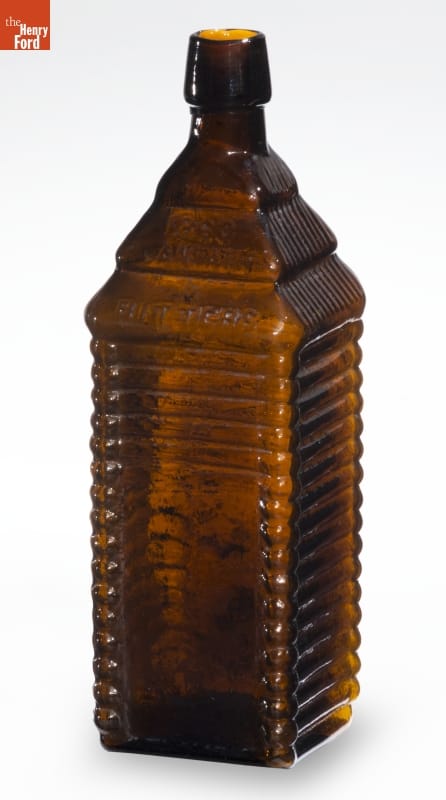
- Drake's Plantation Bitters, 1862-1890 - Bitters is an herb-infused alcoholic mixture. Named for its bitter taste, the liquid was originally developed as a medicinal tonic to help soothe stomach complaints or other digestive disorders. During the late 19th and early 20th centuries, patent-medicine dealers bottled and sold the elixir. Americans purchased bitters in simple mold-blown bottles or ones shaped like drums, barrels, or cabins.
- 1862-1890
- Collections - Artifact
Drake's Plantation Bitters, 1862-1890
Bitters is an herb-infused alcoholic mixture. Named for its bitter taste, the liquid was originally developed as a medicinal tonic to help soothe stomach complaints or other digestive disorders. During the late 19th and early 20th centuries, patent-medicine dealers bottled and sold the elixir. Americans purchased bitters in simple mold-blown bottles or ones shaped like drums, barrels, or cabins.
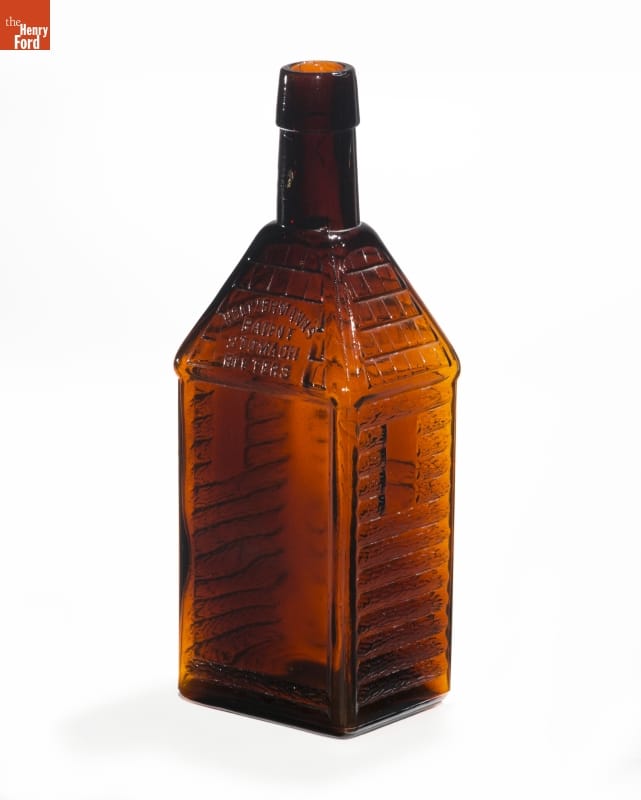
- Holtzerman's Patent Stomach Bitters, 1862-1890 - Bitters is an herb-infused alcoholic mixture. Named for its bitter taste, the liquid was originally developed as a medicinal tonic to help soothe stomach complaints or other digestive disorders. During the late 19th and early 20th centuries, patent-medicine dealers bottled and sold the elixir. Americans purchased bitters in simple mold-blown bottles or ones shaped like drums, barrels, or cabins.
- 1862-1890
- Collections - Artifact
Holtzerman's Patent Stomach Bitters, 1862-1890
Bitters is an herb-infused alcoholic mixture. Named for its bitter taste, the liquid was originally developed as a medicinal tonic to help soothe stomach complaints or other digestive disorders. During the late 19th and early 20th centuries, patent-medicine dealers bottled and sold the elixir. Americans purchased bitters in simple mold-blown bottles or ones shaped like drums, barrels, or cabins.
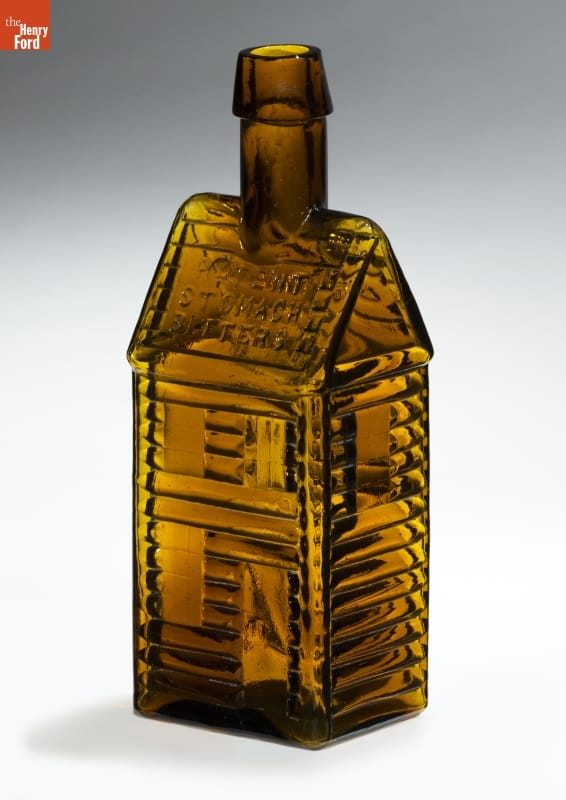
- Holtzerman's Patent Stomach Bitters, 1862-1890 - Bitters is an herb-infused alcoholic mixture. Named for its bitter taste, the liquid was originally developed as a medicinal tonic to help soothe stomach complaints or other digestive disorders. During the late 19th and early 20th centuries, patent-medicine dealers bottled and sold the elixir. Americans purchased bitters in simple mold-blown bottles or ones shaped like drums, barrels, or cabins.
- 1862-1890
- Collections - Artifact
Holtzerman's Patent Stomach Bitters, 1862-1890
Bitters is an herb-infused alcoholic mixture. Named for its bitter taste, the liquid was originally developed as a medicinal tonic to help soothe stomach complaints or other digestive disorders. During the late 19th and early 20th centuries, patent-medicine dealers bottled and sold the elixir. Americans purchased bitters in simple mold-blown bottles or ones shaped like drums, barrels, or cabins.
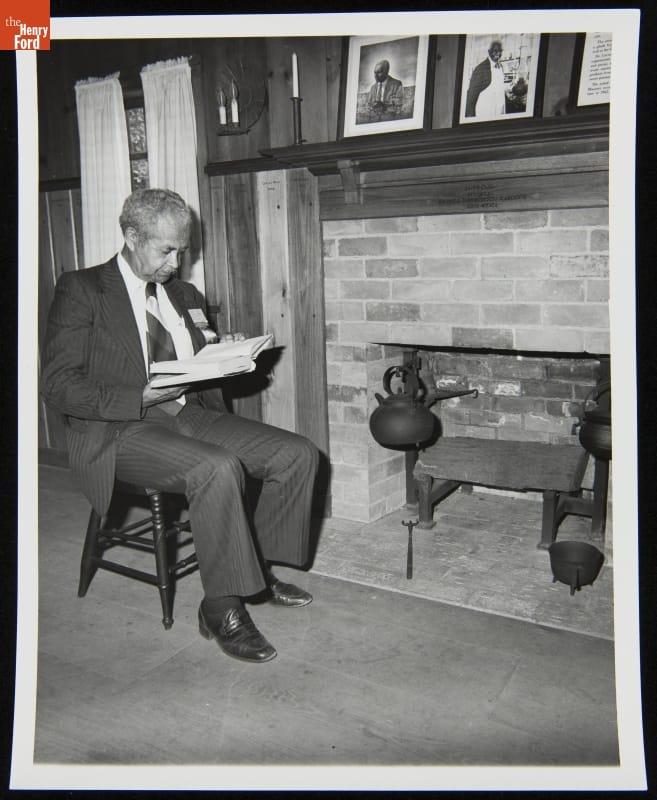
- Austin W. Curtis Visiting the George Washington Carver Cabin in Greenfield Village, August 17, 1982 -
- August 17, 1982
- Collections - Artifact
Austin W. Curtis Visiting the George Washington Carver Cabin in Greenfield Village, August 17, 1982